
Accelerometers and Inertial Sensing
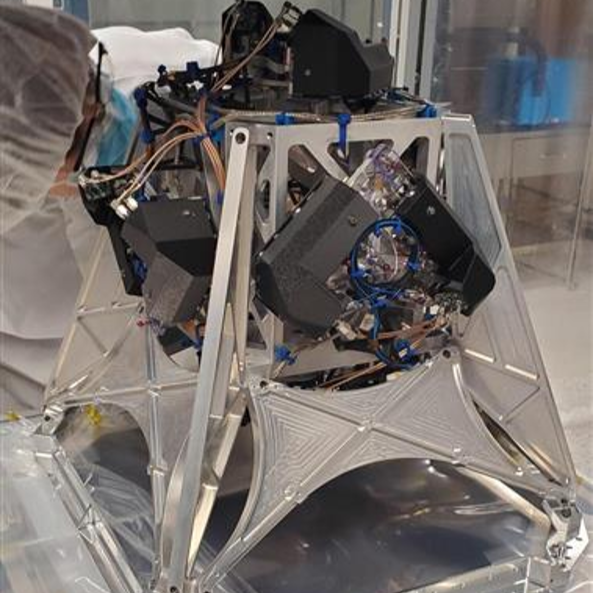
O.D.I.N. arriving for delivery and inspection at customer site.
O.D.I.N., part of the nasa grattis mission
Optomechanical-Distributed instrument for Inertial Sensing and Navigation (O.D.I.N.) is a scientific instrument designed in partnership with the University of Arizona’s LASSO Group headed by Professor Felipe Guzman, IST Precision, and Ruda Optical. O.D.I.N. is part of an upcoming NASA Technology Demonstration Mission called GRATTIS, scheduled to launch in February 2027.
Ruda Optical has been responsible for designing the optomechanical package of O.D.I.N., comprising 12 sensor axes that are intricately aligned to measure linear accelerations, rotational accelerations, spacecraft centripetal accelerations, and the gravity gradient.
ruda is developing the next generation intertial Nagivation Sensor (INS)
Configuration: Same as O.D.I.N.
Full 6-axis Inertial Navigation System (INS), 3 linear, 3 rotational
Additional sensitivity to centripetal accelerations & gravity gradient.
Zero-g inertial sensing; can operate in drag environments
Fully integrated package: sensors & all readout electronics
Performance Expectations
Linear Acceleration: better than 1 ng/√Hz above 1 mHz
Angular Acceleration: better than 100 nrad/√Hz above 1 mHz
Expected performance is orders of magnitude better than a typical INS
Sensitivity is ng/√Hz as compared to µg/√Hz for typical systems
SWaP: Size, Weight, and Power
Mass Estimate: <16 kg
Core Sensor: 8.8 kg | Electronics: 3.5 kg | Framing: ~3.5 kg
Volume Estimate: 400 mm side length cube
Single unit with fully embedded electronics.
Power Consumption: ~30 W
During launch lock release (1 time): approx. additional 7.5 W
Expected Performance

Linear Acceleration PSD

Linear Allan Deviation
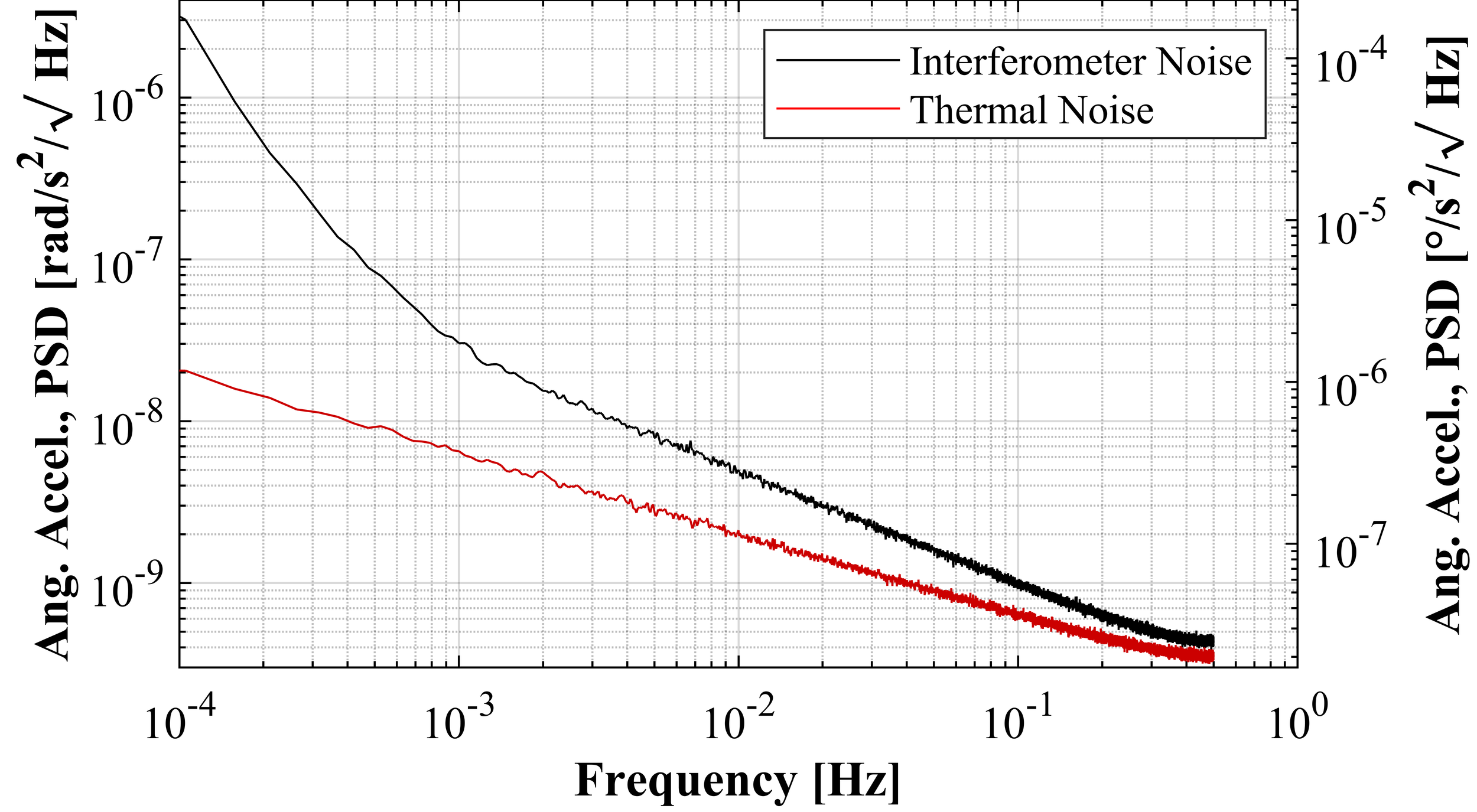
Angular Acceleration PSD
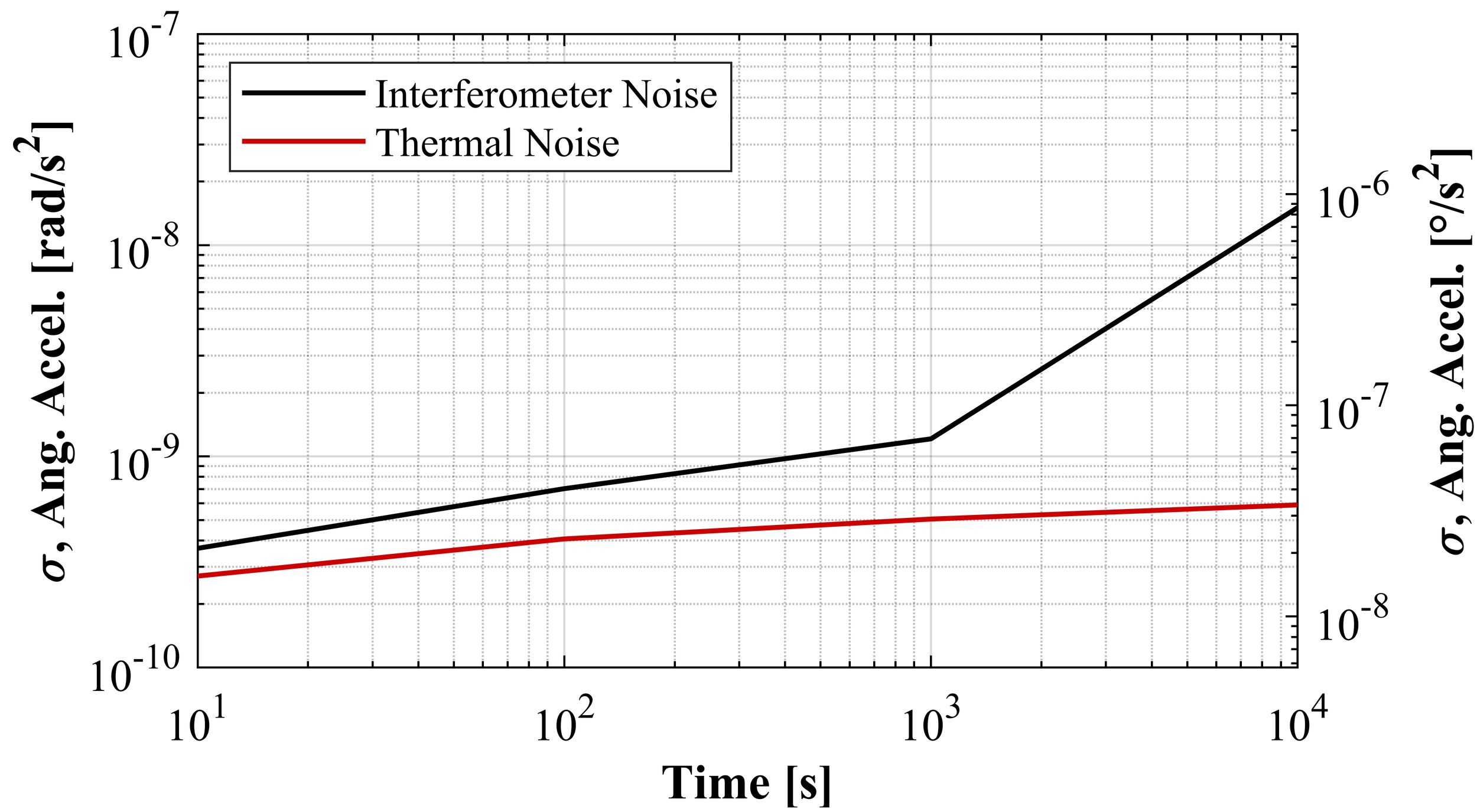
Angular Allan Deviation

Core Sensing Technology
Sensor is a test mass suspended on monolithic flexures.
Monolithic flexures provide high-Q (>200,000 typ.)
Test mass size is tailored to application sensing region
Dynamics exhibit near-perfect representation of a 2nd order spring-mass-damper system; readily characterizable.
Flexures provide very linear sensing with high stiffness (noise rejection) in other degrees-of-freedom.
Test mass motion is caused by input accelerations
Test mass motion measured by interferometry
Current: Balanced, differential heterodyne architecture; first-order insensitive to thermal changes
Exquisite sensitivity: Displacements <10 pm can be readily measured
Extremely high dynamic range; can measure <10 pm at large test mass motion ranges and at high bandwidth.
Other interferometry architectures can be used, depending on application, sensing range, SWaP, and test mass configuration.
Partnership


Laboratory of Space Systems and Optomechanics, University of Arizona